 A few weeks ago, Leslie and I were standing at the crosswalk waiting for the light to change. As we patiently awaited the signal, a stray dog casually walked up to us and sat down. When the light changed, he stood up and crossed the street before taking a left and continuing up the sidewalk. While this may seem strange to people in most countries, in Moscow it is a common occurrence. Therefore, I would like to reveal to the world the truth about one rarely mentioned aspect of the former Soviet Union, namely, its treatment of canines and their elevation to a place of envy amongst all of the dogs in the world.
On November 7, 1917 the entire world stood in awe of an earth shattering event. The turmoil and strife caused by the first World War had allowed for a group of political radicals to seize power in Russia. Promising to create a world free of exploitation and subjugation, they set the stage for the most ambitious social experiment in world history. People from around the world made their way to Moscow to contribute their services to the cause. It was as a part of this pilgrimage, that a group of dogs from Scotland and Germany united to form a lobbying group for their interests. Their appeals made their way to all of the belligerent countries, and it was not long before a small coalition had formed. By late November, the dogs had enough bones to pay for steamer fare. They arrived in St. Petersburg in time to present their platform to the entire Communist movement.
The dogs had a difficult road ahead of them. There was a vocal anti-dog faction within the Bolshevik party. Fortunately, Vladimir Lenin was a firm supporter for Dogs rights.
 In his widely read treatise, "Собаки и Народ, Ровня?" (Dogs and the People, the Same?), Lenin spelled out his beliefs concerning the inalienable rights of all dogs within a Socialist framework. Lenin's strong personality was not enough to get the equal rights amendment passed. This coupled with the impending Civil War forced many of the dogs to flee the country. Unfortunately, the movement of dogs toward Moscow had caused many western governments (including the United States) to pass harsher laws restricting the rights of K-9's within their borders. Many of the returning dogs were collared by local authorities as soon as the entered their native countries. The small and vocal minority of dogs that remained in Russia watched all of these events in horror. Realizing that their only hope for equality remained in Russia, they hastily prepared a new manifesto and presented it to the Communist Party. Once again backed by Lenin, the uphill struggle for dog equality was renewed. The stage was set for the greatest triumph in the recorded history of the species.
The Civil War in Russia forced the dogs into a tight spot. The country had sunk into a level of depravity never before seen, and it was hard for both dogs and people to feel safe. Seeing the revolution (and their future) in trouble, many dogs joined the red cause. Their tenacity coupled with their dogged loyalty to the cause, left a positive impression on many of the leading Communists. In 1921, with the fighting beginning to ebb, Lenin finally resubmitted the call for dog equality. The vote was almost unanimous. The People's Official and Original Charter for Hounds, or P.O.O.C.H. was officially put into effect on March 15, 1923. A type of euphoria swept the entire canine community, but it would only be temporary. A series of strokes had permanently debilitated their chief benefactor. In January 1924, Lenin died and the second phase of the struggle for true dog-man equality commenced.
 Lenin's death helped propel Joseph Stalin, then General Secretary within the party, to the top of the leadership pool within the Soviet Union. Stalin, who had been in the dog house ever since supporting the motion against P.O.O.C.H., decided to make the repeal of the legislation his chief priority. Despite this, the dogs were not about to roll over and play dead. They mounted an effort against the new leader. Joining Trotsky's "Left Opposition", the dogs would angrily bark down any supporters of the General Secretary. Despite this, Stalin's place became more and more secure. The fall of Trotsky in 1926, led to an even tighter leash on dog activities in the Soviet Union. The "Collectivization" campaign during the 1930's further eroded the rights of dogs to the point that they were forced to beg for strips of land, while still unable to bring home the bacon for their families. In 1939, P.O.O.C.H. was repealed. The dogs were in a daze at their misfortune. They entered the 1940's with their tales between their legs and very little hope for the future.
The Second World War put Soviet canines in a tough situation. They could side with their German brethren then under the grip of fascism or support the state that had fallen so far from its original ideals. Fearing the possibility of digging themselves deeper into a hole, they decided to throw their support behind the Red Army. The war cost many lives and the ineffective leadership forced many dogs into a corner. Despite this, the German invasion caused a feeling of patriotism that aroused a rabid defense. The end of the war caused a return to pre-war conditions, but now many dogs (and some people) were howling for a new form of legislation to guarantee their rights. Despite this Stalin remained steadfast. It would not be until his death in 1953 that the dogs would finally receive their just dessert.
Stalin's death caused a renewal of efforts to guarantee dog equality. Fetching copies of the old legislation, the dogs presented Khrushchev with the necessary framework for a new bill. In 1956, B.A.R.K. (Bill for Animal Relief and Kindness) was passed. No longer just chasing their tales, they continued to advance in society. I
 n 1957, a dog named "Laika" was the first animal in space. (I would like to remind the readers that Laika is also the longest formerly living animal still in space) Throughout the duration of the Soviet Union, dogs would receive ample pensions, while being treated to some of the best parks the country could afford. Naturally, this would all come crashing down in 1991.
The collapse of the Soviet Union caused an immense amount of strife for everyone residing within its borders. For dogs, its not been much different. They have taken to traveling in packs, scrounging for food, and begging for handouts. They have even begun to resemble strays in many other countries, listless and unmotivated. Critics of Russia's new course have blamed the rampant speculation and unchecked capitalism. Unfortunately there is no way of knowing for sure. The one thing that is certain is that dogs have become animals in the land that they once ruled. Despite this, there still remain glimpses of their past in many of their present actions. There constant presence in metros, their adherence to important traffic rules and naturally their willingness to submit to the lowest strata of society, have more than proven their civility and cultivation. It is from this species that we should look for our next period of enlightenment. If we don't, we will be nothing more than mongrels, nipping on the heals of actual progress.

 This week while watching Russian television, I stumbled on MTV. While this error would elicit a quick and thorough attempt to either destroy the television, or at the very least, change the channel, I hesitated due to the fact that I saw a music video. Now as many of you know, MTV is a cancer that infects all that encounters it. Filled with the most banal trash ever viewed, it was the only channel that I programmed out of my TV at home, such were my fears of even viewing a nanosecond of some reality show or worse. Unfortunately, since I'm in Russia, I was sucked into what appeared to be shadow of its past relevance, and decided to stay and see if perhaps it was different here. It was at this moment, that this error began to bear fruit. I saw a video by an "artist" called Rihanna featuring Jay-Z. Now many of you may fault me for what happened next based on the argument that I should have expected what would happen just from the name "Jay-Z." I can only say that hindsight is 20-20, plus Rihanna looked attractive. Anyway, I was thrown into an abyss of crap of which I can't adequately relate in words. The "song", titled "Umbrella," was her just gyrating to the semblance of a beat, while repeating the word "umbrella." After two to three minutes of this, it ended, my ears accosted to the point that I feared I would be incapable of listening to music again. It was at that moment that I realized that the "dark ages" of music that we have had the misfortune to live in, had at last reached a new, frightening level. Music, the medium believed to be a direct gift from God, had finally and irrevocably decided to cut its ties with its chief mode of appreciation, the ear.


 A year ago this month I found myself in a difficult position. I had just returned from China and was planning my move to Japan. Before I left, I decided to visit the Hummel family and discuss my past and future plans. It was during one of these meetings, that I encountered an object of almost universal importance. Of course, I'm referring to the...BONE KNIFE. For those of you who have somehow remained ignorant of such a historically powerful object, I can only suggest that you read my August 2006 blog entitled "Beware the Bone Knife." In any event, I was given the opportunity to briefly hold the knife last year. While my previous entry detailed the the joy and pride I felt during the brief moment that I held it in my hands, I purposefully purged my article of any description of the feeling that engulfed me while it was in my possession. At the time, I was afraid to divulge what the knife had made me think, what it made me want to do. Only now do I feel strong enough to reveal its secret. The bone knife makes you drunk with power. It makes you think you can kill anyone, not just your son, his friends, and terrorists. I could feel the mad rage building and could not take it anymore. After the picture was taken, I hastily put the knife down, afraid to touch it again. I vowed then never to touch it again, as I boarded my plane for Japan, the BONE KNIFE was the furthest thing from my mind.


 I would like to begin by apologizing for the extended absence. You see, I have taken to using the free wireless network that only a classy establishment like McDonald's could possibly provide. As a result, my infrequent Internet usage (I don't have access at my house) has made writing blogs slightly less convenient. Despite this, I am committed to continuing the tradition that I started in Japan and I look forward to the possible new material that life in Moscow is absolutely capable of providing. So without further ado, I give to you my first extensive blog from the heart of the former Soviet Union.

 I have finally returned. After a long trip and an even longer readjustment period, I am now settled back into Russian life. We begin our job Monday, but until then I don't have any stories to report other than the very same observations and comments I made concerning the country in a number of previous blogs. Therefore, all five of you who still continue to read these posts will just have to be patient until I find something worthwhile to talk about. Until then I would like to direct you to Leslie's blog at
  Well, I’m here. After nearly 24 hours of traveling, I have safely arrived back in Pennsylvania. Sights and sounds of my youth greet me at every turn, and I find myself entering a zone of comfort that only total familiarity can provide. These feelings of contentment have dominated my psyche, and driven me towards high expectations for what I may achieve while at home. Unfortunately, an emotion all too common in Northwestern Pennsylvania has begun to reveal itself. I feel it all around me, influencing all of my actions. Like quicksand, every attempt to free myself causes me to sink further into its unholy clutches. Now, many of you who have read my writings before may recognize the tone as a prelude to a further lament of my inherent laziness. While this is a good guess, it’s altogether incorrect. The feelings of malaise that I have begun to experience are not due to my own personal deficiencies, but by the very nature of my hometown. Therefore, I would like to introduce the nature of my community in order to shed some light onto one of the (many) reasons that I have become a past and future globetrotter, and why the feelings of abject apathy are nothing out of the ordinary.

 Well the time is finally here. On Tuesday I will be leaving Japan for a brief visit back to the United States before finally moving on to Russia. It is hard for me to put into my words my feelings about my year spent in Japan. After all, my leaving has been a day I've been longing for since I arrived. Unfortunately this mind set has forced me to under appreciate the subtle positive aspects of my life here and instead I have frequently highlighted the consummate onslaught of negative features. In any event, as a way of saying farewell to a land of such amazing highs and lows, I have decided to focus on the agreeable tenets of my life while conspicuously ignoring any of my own dissenting opinions. I chose this option because the sheer magnitude of disappointments and frustrations that have greeted me throughout the year, would force me into a writing binge that would last no less than an week. Therefore and with my own health in mind, I have decided to make a top five list detailing what I believe to be the best parts of Japan.


 Recently, I decided to visit a local convenience store in the hopes of finding something delicious for lunch. As I walked, I was surprised to find myself in relatively good spirits due to the anticipation of my goal, a ham and cheese "sando" (sandwich in Japanese). All of my optimism for the day dissipated when I laid eyes on a gut wrenching scene of mindless destruction. A small white car had managed to jump over a six inch concrete barrier and crash through a large window in the front of the convenience store that held my prize. Shocked at the carnage, while at the same time puzzled about the logistics of a seemingly impossible act, I entered the store and looked around for clues concerning the identity of the perpetrator. It was then that I laid eyes on a culprit so obvious that my previous confusion seemed embarrassing. Before me stood a small shortsighted man looking dazed and slightly inane. He could have been no younger than 70 and his deficient brain capacity had accidentally caused him to back out of his parking space in "drive" rather than in "reverse." All of my fellow patrons showed utmost respect for a man who had just managed to destroy the frond end of the store, and the staff even gave him a hearty "thank you" when he bought a drink to tide him over during his wait for the authorities. It was into this display of lunacy that I realized the threat that hangs over us like adult diaper ready to burst. Evidently, old people are nothing more than a reactionary force bent on the propagation of outdated ideas, forced submission to their will, and worse, the threat of death from frequent mistakes involving mundane tasks. It is into this depressing world that I fire the first shot into the inevitable war between youth and the growing force of "Olds."


 As my time in Japan comes to an end, I am thrown into a state of constant reflection concerning past events. As with any reminiscing, the times and subjects begin to blur. Therefore, instead of thinking over interesting experiences that have occurred during my stay in Japan, I began to find myself thinking about the cold winters of Northwest Pennsylvania. Naturally, this opens the door for my fifth (and final while living in Japan) installment of my "Tales From Home" series! So without holding back any eagerly anticipated details concerning my youth, I present to you a charming story about a dog, a man, and the joy of freedom.

 During my time in Japan, I have been repeatedly subjected to the uncomfortable truths surrounding the conclusion of the Second World War. The atomic bombing of both Hiroshima and Nagasaki left an indelible mark on the nation and its people, and the threat of future bombings forced the world into a state of sustained fear. Fortunately, the end of the Cold War caused this anxiety to subside, and many hailed the 1990's as the final conclusion of the animosity that had characterized a majority of the twentieth century. Faced with a near international distaste for bombs capable of global annihilation, the American military decided to focus on non-lethal options. It was the pursuit of this policy that lead them to search for a logical and completely rational alternative. It was with this in mind, that Pentagon officials requested over 7 million dollars in order to research and develop....a "Gay" bomb. Once completed, this ultimate weapon would be capable of not only "turning" people gay, but it would also have the power to force them to be so attracted to other members of the same sex, that they would be unable to resist having sex with each other. Now before everyone criticizes what appears appears to be an ignorant and altogether stupid idea, I would like to warn you that the motivation should not be the most frightening aspect of this revelation. During my research, I was fortunate enough to find the reason why the bomb's funding was denied. Of course, this is nothing short of a journalist coup on my part! The following is a condensed version of what many felt could be the possible repercussions of a successful bomb attack. Therefore, I would like to reveal the potential results this brash implementation of arbitrary power could unleash upon the world.

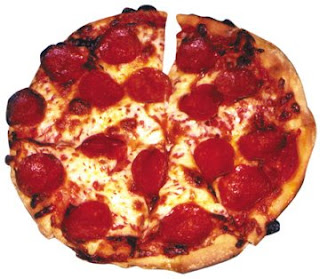 Since the beginning of its existence, Christianity has been about promoting itself. Whether it was through second century asceticism, twelfth century violence, or nineteenth century evangelism, the religion has always been keen to utilize new ways to gain converts. Despite this, the Judeo-Christian faith has never been good at creating its own methods for appealing to non-believers. As a result, Christianity began to borrow already established foods, practices, stories, and history, in the hopes of "Christianizing" them so that the religion would be more appealing. Even the central Christian tenets of one God (Zoroastrianism), the virgin birth (Mithraism, and the God "Mithras" born coincidentally on December 25th, as well as "Hercules" in Greek myth), and the execution/rising from the dead (Osiris in Egyptian myth and others) were borrowed from "pagan" religions. Despite this, Christian approaches toward these features was far from symbiotic and in fact, quite parasitic. Almost every approach at Christianizing something that was already popular with a majority of people has resulted in not only failure, but it has also lessened its appeal in the eyes of its former adherents. Fortunately for Christians, there is a glimmer of hope. One object has been repeatedly subjected to its negative influence and always comes out the same if not stronger. Its resilience has been hoisted as a beacon for non-believers, and Christians constantly cite it as a reason to enter their hallowed halls. Of course, I'm referring to the mainstay of the Christian attempts at "secular" parties, pizza.


 Well, its that time of year again. The moment when all of humanity lifts their voices in apparent unity to celebrate the imminent arrival of warmer weather. All winter, people have mused over their plans for the spring and summer. Strangers have come together to excitedly talk about the amount of outdoor activities, sports, and fun that the summer utopia allows. This euphoria blinds even the most vigilant of minds, and any memories of the previous summer are washed away by the idealism encapsulated in their varied plans for the season. It is into this delusion that I hope to make one seemingly obvious but sacrilegious observation. The summer season, at its essence, is the embodiment of all of our disappointments and failures. While this may seem harsh, I feel that I can adequately support this argument. Therefore, I would like to use the following article to convince my readers to follow my hastily thought out, but altogether reasonable ideas on summer.
